Author: James Glazebrook

  • On blogging: Why we turned off comments

    Category:

    The more observant of you will have noticed that we’ve turned off comments here on überlin.

    Maybe you found you couldn’t enter a competition, because I’d forgotten to turn comments back on in those rare cases where we still allow them. Perhaps you were particularly incensed by the latest thing this expat/hipster/douchebag/gentrifier/all-of-the-above had written. Or you might just have been wanting to tell us how much you love us, but couldn’t. Well, here’s why.

    Firstly, and most obviously, internet comments are infamously terrible. Sure, most of our commenters have been very supportive and positive, but a minority have split hairs, gone on inexplicable tangents, ranted, singled us out to blame for the (inevitable) changes happening to Berlin, and one even told us in no uncertain terms: go home.

    The main reason for this shittiness is that people aren’t accountable when they’re anonymous. If no one knows who you are, you can be as hateful, reactionary, incoherent and misinformed as you like.

    Of course, we ask commenters to provide their names and email addresses, but we have no way of verifying this. Even if we used something like Facebook login to verify people’s identities, the Zuckerberg dodgers could use their invented FB names to shroud themselves in semi-secrecy. Besides, even if we could achieve total transparency and accountability with comments, we’re not sure that we should be insisting that people, especially Germans, share their personal data in this way.

    So, given a choice between anonymous comments and no comments, we went with the latter.

    Another reason for switching off comments is that we’re no longer focused on producing content that provokes comment. Depending on your perspective, we used to be great at/notorious for hilarious/reductive observations/stereotypes about Germans and Germany, and at times, we’ve been guilty of full-on trolling. These days, however, we’re more interested in showing off Zoë’s beautiful photos of places, people and their dogs, and getting to the heart of what inspires the creatives who call Berlin their home.

    This is great content, and we think it’s very shareable, but it doesn’t require your input. If you like something, great – feel free to share it with others on Twitter, Facebook, email or whatever. If you don’t like it, that’s fine too – just look away.

    And that brings us to the final reason we turned off comments. We received too many comments like “this comedy piece on going to a German supermarket doesn’t discuss the impact of LIDL’s pricing policies overseas”, which could all be translated as: “I’m annoyed that this article isn’t about something else that I’d rather be reading”. I found myself arguing with these people, then trashing their comments (as they were about an entirely different subject than the article, they weren’t relevant), and then deciding: we don’t need this.

    As content producers, we accept the fact that we’re doing all this for free. We run überlin for love, not money, and the fact that our content is kostenlos allows it to reach far more people than it would have in the days before a free, open, democratic(ish) Internet. The problem with this is that people don’t always value what they get for free. And if it isn’t exactly what they wanted to see, they’ll be sure to tell you. I wonder if the editors from Lawnmower Monthly receive letters saying “Dear Sir/Madam, I bought your magazine and was disappointed to find absolutely no photos of monkeys riding motorcycles…”?

    The point is: everyone absolutely has the right to their opinion. They just don’t have the right to make people listen to it. We spent five years building this site, filling it with content and growing its readership. If you don’t like something on the site, by all means tell the Twitter followers you earned through your own hard work – hell, tell us. But you don’t get to take the megaphone out of our hands and use it to broadcast your own opinions, while hiding behind the mask of anonymity.

    Hence (with a few exceptions): no more comments here on überlin. In the month or so that we’ve been without comments, we haven’t missed them at all. We still get plenty of feedback via social media, and we’re always thankful for that. If you have any comments about this post, or anything else we’re doing, hit us up on Facebook  and Twitter. The (on-site) comments are dead; long live the (off-site) comments!

  • Portrait: Layne Mosler, the Taxi Gourmet

    Category:

    portrait Layne Mosler
    When you meet Layne Mosler for dinner, chances are that she found out about the place from a taxi driver. Back in 2007, she started a blog called Taxi Gourmet, based on one simple, genius idea: she would get in a taxi, ask the driver to go to to his or her favourite place to eat, and and document the adventure, culinary and otherwise. After years of adventures in New York, Buenos Aires and Berlin, Layne recently turned the blog into a book, Driving Hungry: A Memoir.

    We caught Layne on the week of the book’s release, just before she flew back to America for a short promotional tour. It was Eid, at the end of Ramadan, so we asked Layne to take us to her favourite places around Berlin’s “Little Istanbul” in Kreuzberg. We found her at Konyali, an unassuming restaurant directly on Kottbusser Tor, enjoying some of their homemade yoghurt drink, ayran.

    portrait kottbusser tor food Layne Mosler

    So how did you find out about Konyali?

    Funnily enough, it was about this time five years ago, around Ramadan. I got into a taxi with a driver named Eren, who brought me here because this is the only place in Berlin which makes ekmek. Similar to Turkish pizza, it’s baked in a brick oven, and comes from Eren’s home village near Konya. This is one of my favourite places to eat, and it’s cheap!

    Were taxi drivers open to sharing their food secrets with you?

    Yes! This was my first summer in Berlin, when I didn’t speak any German, and the Turkish taxi drivers were very sympathetic to that. We signed our way, and muddled through with English, and they took me to all these places that I still go back to now.

    They were very excited about me wanting to eat where they ate. When you ask someone about food, you’re creating an automatic connection. When you talk about their food, not where they think you want to eat, you can have an intimate conversation in a short period of time. A taxi ride is very fleeting – you have to quickly get to the nitty gritty.

    When did you start exploring cities’ food scenes in this way?

    The Taxi Gourmet project started when I lived in Buenos Aires – it couldn’t have been born anywhere else. I was dancing tango, so I had to get around town at very odd hours, and the taxis are so cheap.

    The drivers there are so forthcoming and so charming, and they have these spectacular stories. You just have to nudge them and they come out with these philosophies and tales – whether they’re true or not, I don’t know, but they’re very entertaining. I was finding that I learnt more about the city during taxi rides than in any other context.

    And the Buenos Aires taxi drivers know all the best places to eat?

    Some of them. At the time, most of the taxi drivers were Argentinian, so 90% of the time, they would take me to a steak house. And I was running out of adjectives to describe beef!

    I also knew that I wasn’t going to be in Buenos Aires forever, so I started thinking about cities that have really well developed taxi and food cultures, and I decided to see what would happen if I transplanted the project to New York.

    And how were your New York taxi adventures?

    It was difficult at first. Cabbies would be like, “you don’t know where you want to go?!” Most people in New York have an agenda, taxi drivers included. So I ended up having to give the drivers a fake destination, usually a straight shot of 40 blocks or so, and then when we were having a conversation, slip in the question of where to eat.

    Then I ended up meeting these two women who drove taxis in New York. One is this fierce Nuyorican woman who wears brass knuckles, drives at night and beats up men who beat up women. But she’s the sweetest thing, who wears her shitzu like a stole around her neck – and she just blew me away. And, not long after that, I met this very petite, purple-clad cab driver who was also going to nursing school part time. We got to talking, and I thought, “If she can drive a cab, I could drive a cab.”

    I studied anthropology, and I like the idea participant observation, and realised that I was reaching the upper limit of my understanding from the back seat of a taxi. So I decided to get my cab licence.

    How was life as a New York cabbie?

    It was terrifying! The first time I drove through the city was in a cab, and I didn’t do it long enough to lose the fear. Plus, because of the taxi lease fee, I walked away from my first shift with two dollars. Pretty early on I realised: this is going to be research.

    Within the first three hours, I realised how preposterous it was to ask a New York cab driver where he or she likes to eat on duty. I used to be disappointed when they replied “I eat wherever there’s parking and a bathroom”. But then I found myself eating at Dunkin’ Donuts… because there was parking and a bathroom! Very quickly, I stopped romanticising the job.

    But it was really lovely to meet people that I wouldn’t have in my normal day-to-day life. We make assumptions about people within seconds, but there would be at least one person per shift who would just defy my expectations. Being reminded over and over again, that all of our assumptions are absurd, was a good thing.

    portrait kottbusser tor food Layne Mosler

    After her American experiment, Layne found herself in Berlin for the first time. “I felt an immediate affinity with the city,” she says. “Doors were opening, and people were interested in my project, despite the fact that this isn’t known as a ‘food city’…”

    One of those doors opened onto the passenger side of a taxi whose driver would go on to play a big part in Layne’s extended stay in Germany. In fact, our next stop, Leylak on Kottbusser Strasse, was originally the recommendation from this very taxi driver. “I haven’t found better börek in Berlin – it’s my husband’s favourite.”

    food portrait borek

    How did you meet your husband?

    He read about my taxi adventures, and found them really interesting. He got in touch, describing himself as “a little gourmet”, and offered to give me a tour in his taxi, and show me some places he liked – especially because I hadn’t yet tried any German food.

    I got a good feeling from his email, so we arranged to meet at his taxi cab. When he turned around I went, (voice quivering) “Oh…” Because he was quite beautiful, and I wasn’t expecting that at all. And then we got to talking about Berlin, about how he had danced on the Wall when it came down, and how the city has changed, and his relationship to it, and about books and philosophy… And I was really quite fascinated from the get-go.

    And then I went back to New York, and on a whim invited him out for a visit. So he came out for a week and, among other things, rode along in the cab with me for a shift, which was great. I moved back to Berlin six months later, and have been here ever since.

    I’m still very much in love with Berlin, in a way that I haven’t been with any other city I’ve lived in.

    Even though this isn’t a “food city”?

    Well, whenever I’ve found myself in more upscale restaurants, I’ve been disappointed. So far I’ve never found anything particularly sublime or mind-blowing, and when I’m paying €30 to €50 – and I’m used to paying €10 – I think it should be pretty close to sublime.

    But what’s interesting is that are all these young chefs are coming to Berlin, not only because it’s cheaper to open a restaurant, but also because there’s room for experimentation and the public isn’t quite as demanding.

    Just this year, a handful of young experimental cooks have come to the city to try their luck, and we’re starting to see the development of a food consciousness. However, they are going up against the mentality that the most important thing is to be full for very little money.

    james and Layne Mosler at kottbusser tor

    So what are your favourite places to eat in Berlin?

    Well there’s this place, Leylak. I love how there are always people sitting around here and shooting the breeze. It’s nice, too, that a corner place has such good food.

    My very first taxi adventure in Berlin was with a woman who moonlighted as a naturopath, and she loves Italian food. She told me about this place in Schöneberg called Muntagnola which looks really kitschy and touristy, with a menu in four languages and a sculpture of a fat chef by the door. But it’s owned by this family from Basilicata, who specialise in authentic dishes from that region.

    Another taxi driver, who’s a part-time techno musician, took me to Balikci Ergun under the Tiergarten S-Bahn tracks. It started out a fish store, where the owner would make lunch for his family – until someone persuaded him to open a restaurant. It’s just like being at a fish bazaar in Istanbul – it’s really warm, and a lovely place to hang out. It’s a great, great place.

    Then there’s the next place we’re going to, the Adana Grill-Haus, a tip from a taxi driver from that part of Turkey. Turkish cuisine is very complex, and every region has it’s own thing going on. I never would have discovered that on my own.

    food meat turkish portrait

    You’re about to go on a short tour of the US to promote your book, Driving Hungry. Do you plan to incorporate some taxi adventures into your trip?

    Oh, absolutely. When I land somewhere, I feel overwhelmed. This is a way to cut through everything, and get to something democratic; something that someone has a relationship with.

    I don’t feel really grounded in a place until I’ve had a conversation with a cab driver.

    Portrait of Layne Mosler

  • Win a pair of tickets to The Dillinger Escape Plan m/

    Category:

    @benweinman on instagram

    @benweinman on instagram

    [EDIT: this competition is now closed. Click here to see if we’re running any open competitions]

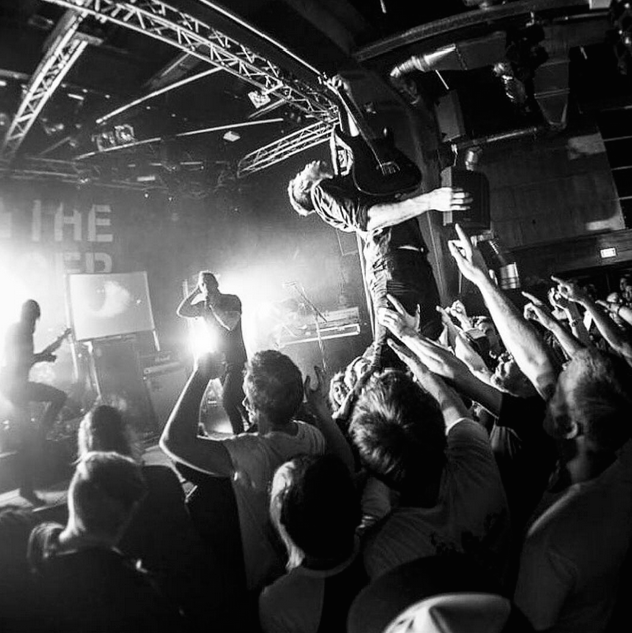
    WTF. The Dillinger Escape Plan have to be the maddest band on the planet. Have a look at their craziest moments, and scroll down to find how to win 2 tickets to see them test Postbahnhof’s fire codes next Sunday, August 16th.

    HOW TO WIN 2 X TICKETS FOR THE DILLINGER ESCAPE PLAN AT POSTBAHNHOF ON 16TH AUGUST:

    Want to headwalk your way to Postbahnof next Sunday? Just answer this question in the comments below:

    What’s the craziest concert you’ve ever been to?

    You have until 6pm on Friday 7th August. Good luck!

    The Boring Bit (yawn, RULES):

    1. You must be at least 18 years old to enter.
    2. ONE ENTRY PER PERSON!
    3. We will keep a record of each comment in a database and then a random number generator picks the winner.
    4. Remember to include your full (real) name and email address or we won’t be able to put you on the guestlist!
    5. We will notify the winners via email.

    7 Responses to “Win a pair of tickets to The Dillinger Escape Plan m/”

    1. Max Rogall says:

      JR Ewing, august 2006 @ Magnet Club Berlin
      Nothing to add.

    2. i have been to a few crazy concerts but the craziest one would be when Kyuss got back together in 2010 at Hellfest.

      i knew that Mondo Generator, Brant Bjork and John Garcia were playing in the same festival, in the same day and i remember talking to a few friends about how cool it would be if they got back together and played some tunes.

      so… every band plays their set without mentioning or playing anything from Kyuss. the last band to get onstage in John Garcia and he plays some Kyuss songs for a while until he decides to talk to the crowd and mentions Kyuss.

      He says that he saw Nick Olivieri and Brant Bjork playing before and that he would like to bring them onstage and play some Kyuss songs for the crowd. Before they got onstage, he mentions something like “… and Kyuss is back.” and they play Green Machine.

      https://www.youtube.com/watch?v=FsD_AqABYIw

      this is the shitty video i did from that song.

    3. Sara Neidorf says:

      The craziest show I’ve ever been to was in a packed basement in the Beaumont Warehouse in West Philly with Stinking Lizaveta.

    4. Franziska says:

      The Swell Season @ Admiralspalast. Not a big fan of this kind of music … but the audience was the craziest I ever saw / heard. The sang every song perfectly. All choir parts and most difficult parts. The whole room was like a professional choir. Nobody could believe this … the band nor the audience. It was like a rush ????

    5. Eduardo Mattos says:

      It was christeene last sunday

    6. Bernd Bauer says:

      Dwarves in Berlin ’05 were utter insanity.

    leave a comment

  • Doggystyle: Liz and Ivy

    Category:

    berlin streetstyle doggystyle french bulldog red hair punk

    “This is Poison Ivy – she’s five years old.

    Does she have any strange personality traits?

    Well, she snores quite loudly… She likes to ride in cars, with her head out of the window. And she doesn’t know what privacy is. She follows me everywhere – to the bedroom, to the toilet. She just wants to be with me all the time.

    I couldn’t imagine life without Ivy. I’m so happy to have her. When I’m sad, or my moods go overboard, I can take my dog outside and everything’s fine.”

    20150715-143447-doggystyle

  • Portrait: Matthew Gordon, Taiko Gallery

    Category:

    Matthew Gordon, Taiko Gallery, Berlin

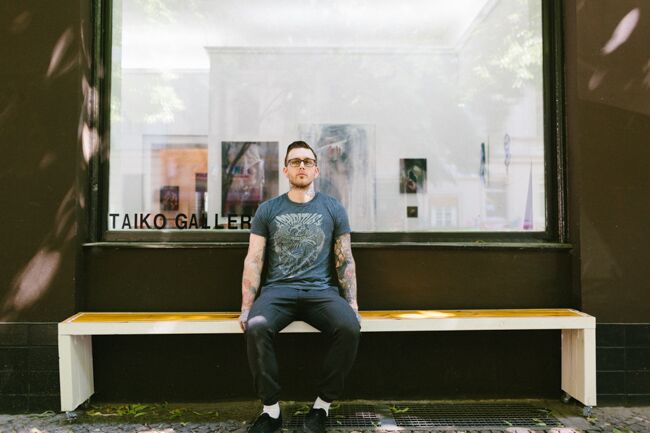
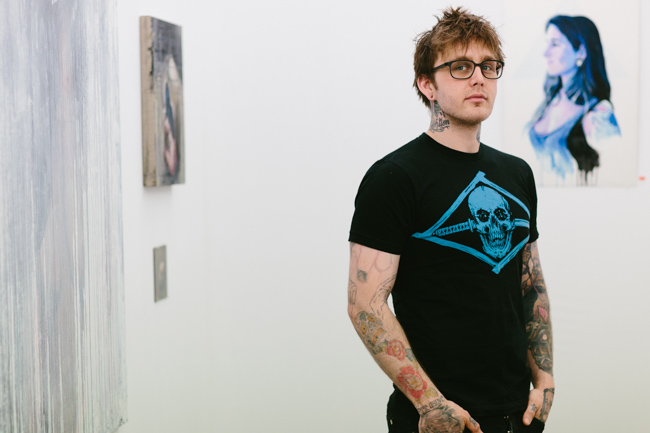
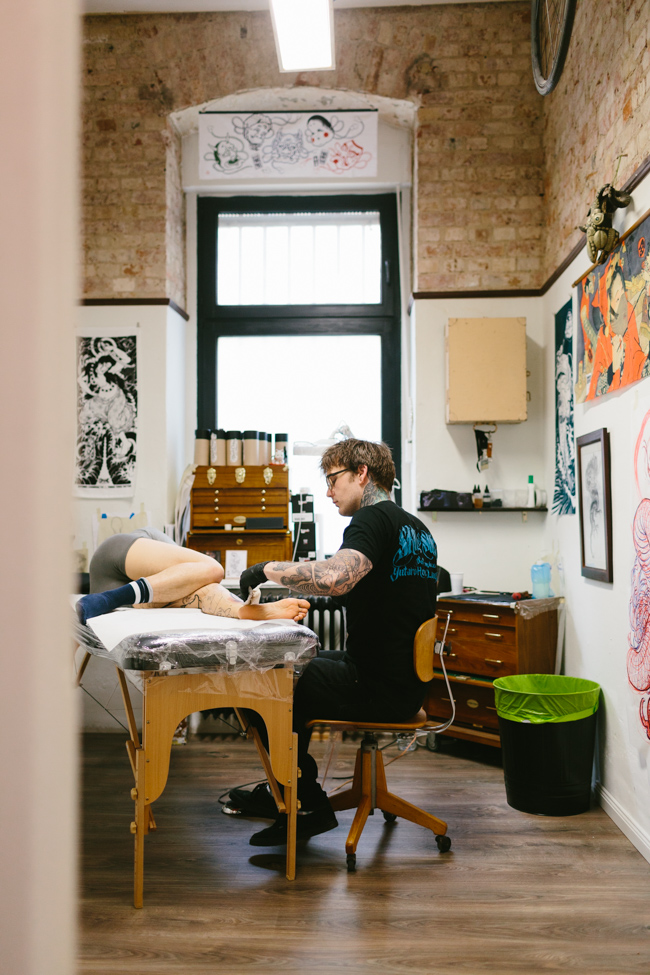
    Meet Matthew Gordon, the co-owner of Taiko Gallery, a new tattoo studio and art space on Schönleinstrasse in our beloved Graefekiez.

    Originally from Sydney, Matthew first landed in Berlin two years ago, after travelling to Europe with his Taiko partner Wendy Pham. They visited fellow tattoo artist Uncle Allan in Denmark, who mentioned plans to open a German outpost, and invited the Aussies to join him. Already half a world away from home, they were unphased by the last leg of a journey to a city they’d never even planned to visit. As Matthew says of his fellow countrymen, “we’re all crazy anyway!”

    Matthew Gordon art space Berlin

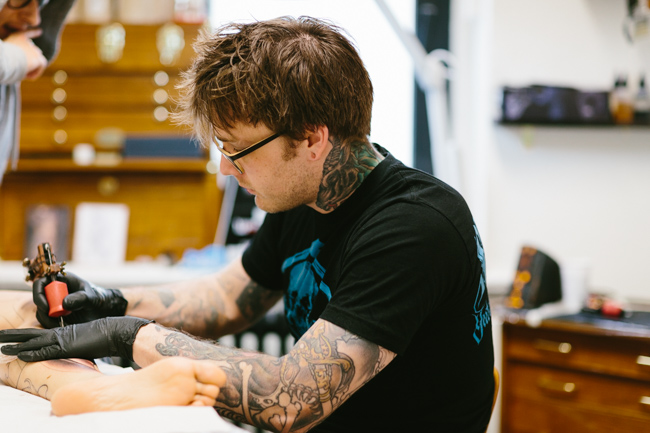
    Moving to Berlin was just the latest in a series of risky but rewarding moves for the young artist. At 19, he quit a promising career as a 3D animator, designing levels for video games and fly-throughs of skyscrapers in Dubai, and persuaded the guy who had started covering his body with ink to train him as an apprentice. Then Gordon cut his apprenticeship short to move to Melbourne, where he opened up a private studio with Wendy.

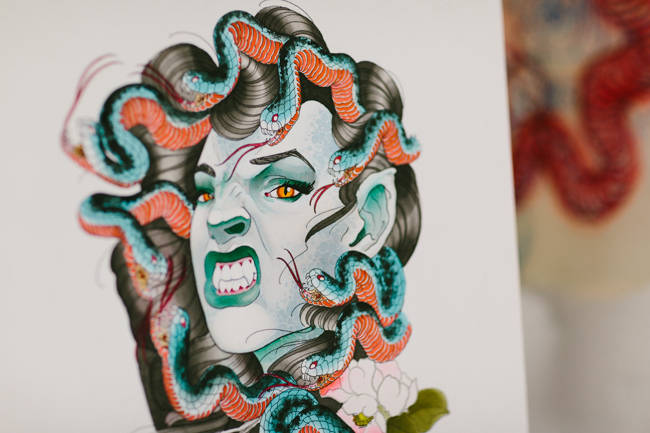
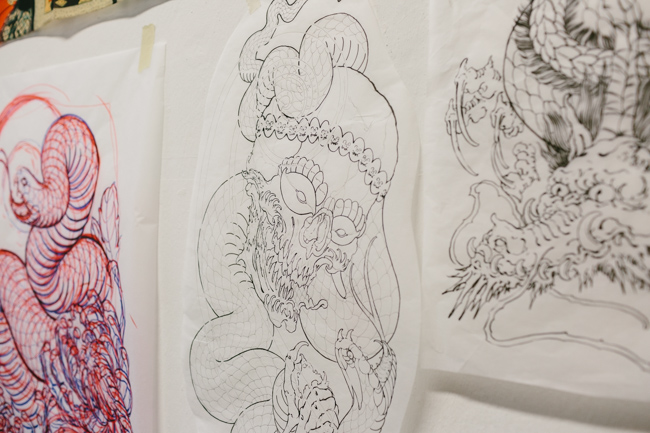
    Inspired by Grime of San Francisco’s Skull and Sword, Shige of Yellow Blaze in Yokohama and local hero Owen Williams of TAMA, Matthew started carving out a niche in the tattoo world: “I don’t look at any other work or references. I draw from my head, and if it’s wrong, it’s wrong. It’s the only way to give yourself a style”. That style, which Matthew calls “open illustrated Japanese”, renders Eastern-inspired imagery in vibrant colour and (not surprisingly) perfect 3D, with dragons and snakes covered in intricate, interlocked scales that pulsate from the subject’s skin. He conservatively estimates that his forthcoming art book contains over 5,000 hand-drawn scales.

    Matthew Gordon Medusa snakes sketch

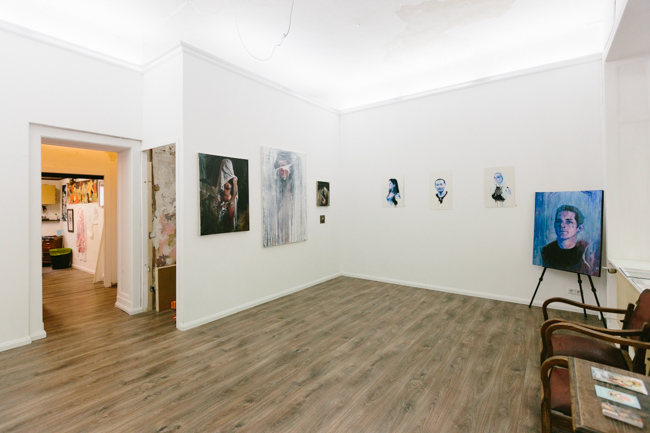
    The desire to be different that informs Matthew’s work is also shaping the shopfront that he single-handedly renovated from a water-damaged, nicotine-stained Fahrschule into a beautiful, white-walled, multidisciplinary space. “We’re trying to create something different, that’s not just a little hole-in-the-wall studio,” Matthew explains. Taiko Gallery  is “more about the art, and less about making a million dollars,” serving as an exhibition space for the founders’ paintings, and a venue for life drawing classes and other creative events. Above all, it is “a positive place”.

    Matthew Gordon art space Berlin

    Unfortunately, not everyone is pleased about the latest development of this small Kreuzberg side-street, where old school Berliner haunts like the 24-hour bar Bei Schlawinchen rub up against the internationally-owned curiosity shop The Cheese Mountain Tragedy. The subject of thoughtless protests against the perceived gentrification of long-gentrified Graefekiez, Matthew finds himself cleaning spit off the gallery’s window almost every day.

    But far from feeling threatened by such low-level hostility – “I’ve got a scythe in the back; I’d like to see them try” – he has been surprised by the extent to which foreigners are tolerated, if not always embraced, in Berlin. “Most of my time is spent in my own little bubble. I feel like an alien sometimes, but that’s OK. I’m in my own little world, no one really pays attention to me, and that’s fine.”

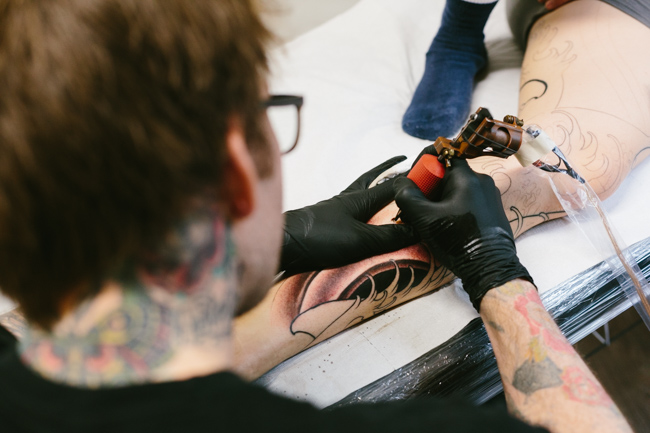
    Matthew Gordon at work tattooing

    “It’s definitely opened my eyes to the way that Australians deal with foreigners. If you go to Australia, and you have trouble speaking English, it’s horrible for you. People are abused to their face, and it’s just shit. If I ever go back and see that, those racists are getting told to shut the fuck up.”

    Provincial attitudes aside, Matthew is optimistic about the future of Taiko Gallery and his adopted home: “Even in the two years I’ve been here, I’ve noticed more art going on and I’ve met lots of interesting people. Berlin is a great city. It’s a good place to have a new thing, one that doesn’t really exist yet. In five years, you’ll have built a reputation, with expats and Germans alike.” Put simply: “Being able to see Berlin grow is cool.”

    Matthew’s book of snake illustrations, the Compendium Vipera, is now available via Illustrated Monthly.

    Taiko Gallery, Schönleinstrasse, Berlin

    Taiko Gallery, Schönleinstrasse, Berlin

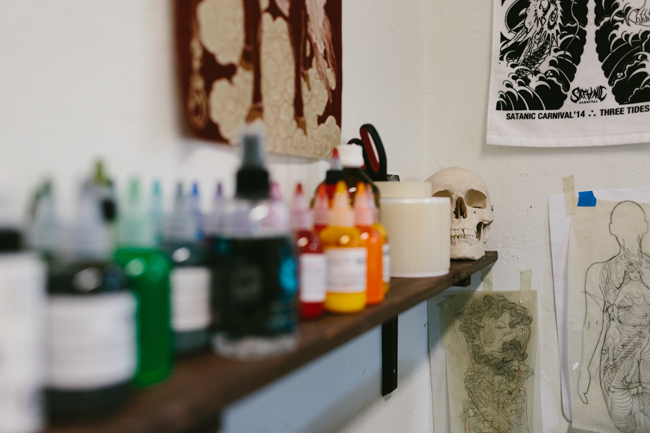
    Tattoo ink bottles

    Matthew Gordon leg tattoo

    Matthew Gordon tattoo sketch skull snake

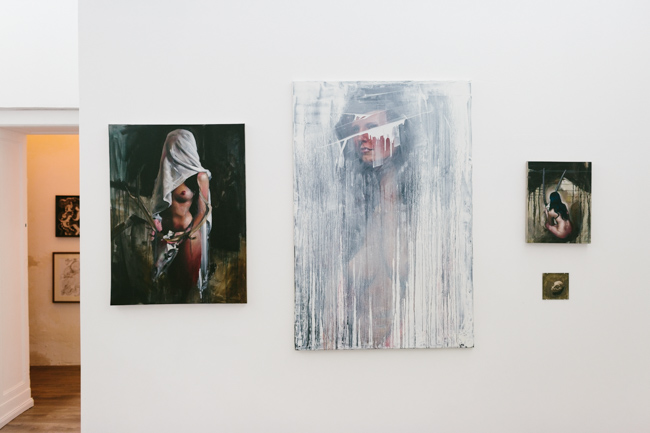
    Matthew Gordon Taiko Gallery paintings

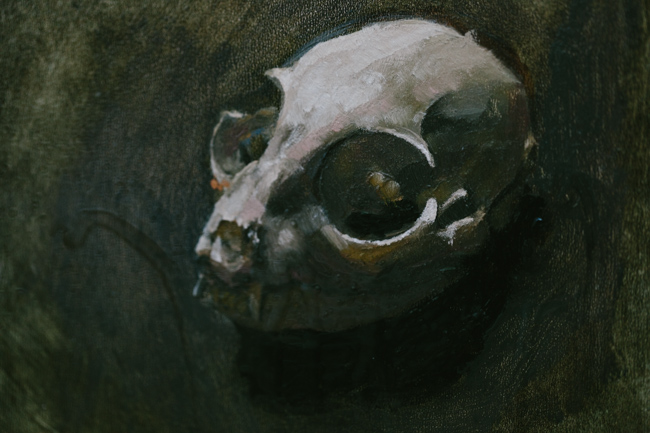
    Matthew Gordon animal skull painting

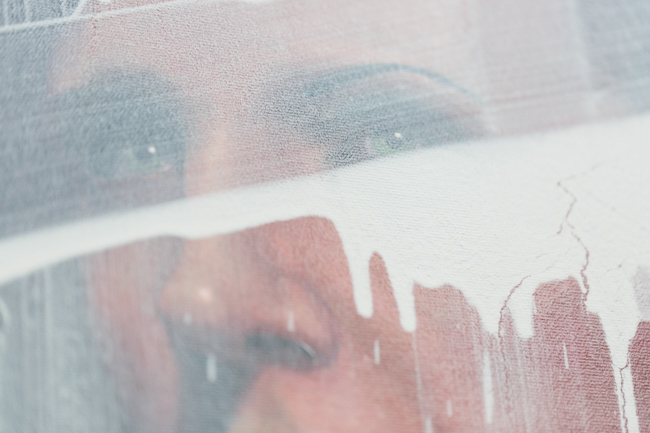
    Matthew Gordon painting close up

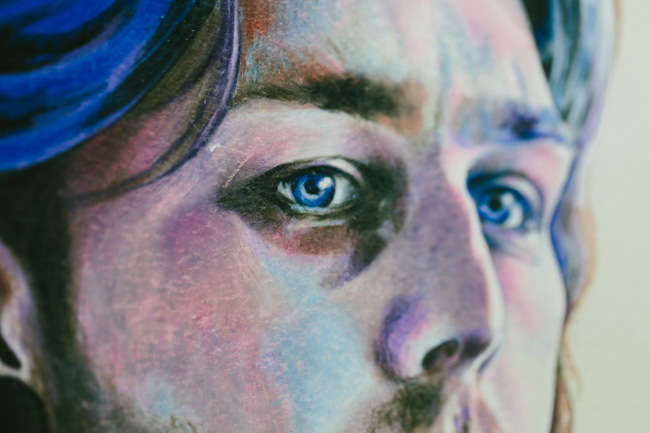
    Matthew Gordon self portrait close up

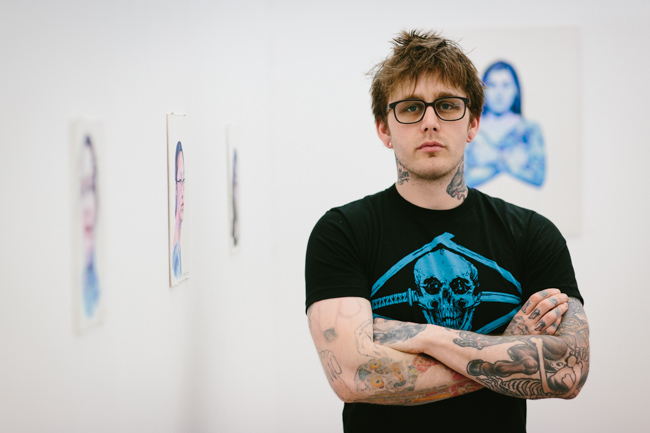
    Matthew Gordon, co-owner Taiko Gallery in Berlin